The 1-3-5 rule gives a normal day up to one large task, three medium tasks, and five small tasks. Count the time you can actually work first. On a meeting-heavy day, leave slots empty or choose a smaller result for the large task.
Size tasks by work, not importance
A large task takes a solid block of focus. A medium task fits a shorter session. A small task can fit between meetings. A brief confirmation can matter more than a long draft, so use size to check capacity and priority to decide order.
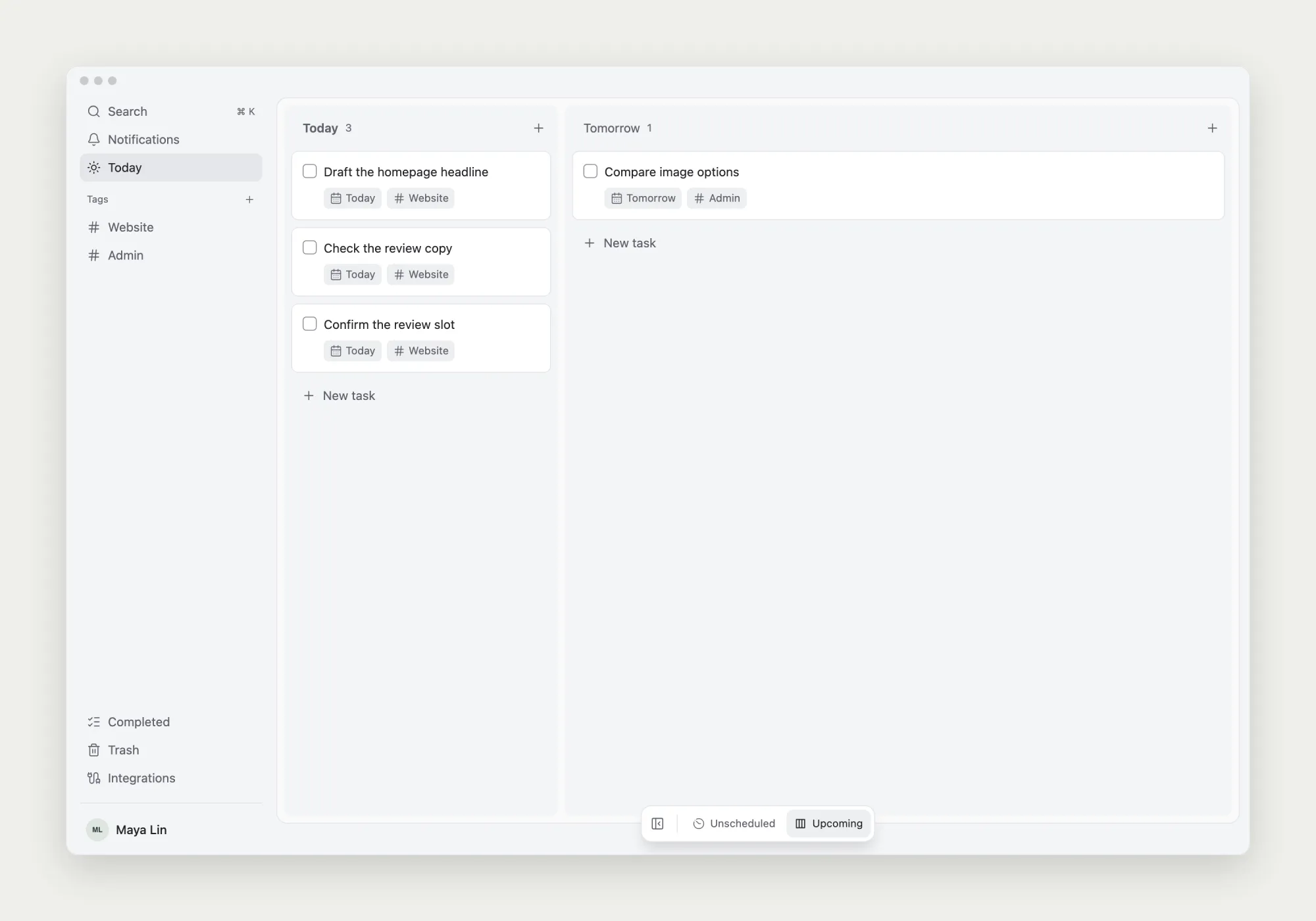
For a website refresh, drafting the whole homepage can be the large task on an open morning. With only a 45-minute block, drafting just the headline and opening paragraph gives you a result you can review.
Compare two filled lists
| Slot | Ordinary day | Meeting-heavy day |
|---|---|---|
| 1 large | Draft the homepage | Draft the homepage headline |
| 3 medium | Check review copy, compare images, outline the FAQ | Check review copy, leave two slots empty |
| 5 small | Confirm review slot, share preview link, file notes, reply to editor, check image rights | Confirm review slot, leave four slots empty |
If the headline needs 35 minutes, the copy check 15 and the confirmation five, you need 55 minutes of work time. Find those windows before assigning more. Move image research to a day with room for it.
Copy the daily 1-3-5 template
Available work blocks:
1 large result:
3 medium tasks:
-
-
-
5 small tasks:
-
-
-
-
-
Leave for another day:In TodoNote, place the chosen actions in Today and assign leftover actions an actual start date only if you have room. A task with several next steps can sit together in its note while you schedule one subtask for today.
Check what carried over
At the end of the day, look at what remains. If the same large task appears again, define the part you can finish in one block and make that the next task.