If AI feels fast but your workday still feels full, inspect one complete deliverable: gathering sources, explaining context, drafting, checking versions, revising, and handing it over. Keep the current requirements and material links with the task, then compare rework and delivery. Generation speed alone misses much of the work.
ActivTrak's October 2026 research discusses associations between AI use, application switching, and workday length. It does not establish that a particular tool causes an individual's overtime. It offers a reason to examine the work surrounding the prompt.
Observe one kind of deliverable
Leo is preparing an event-page review draft. He notices that he repeatedly leaves the task to find a change request in chat, confirm a budget in a document, and identify the latest draft. Necessary specialist tools are not the issue; repeated reconstruction of the same facts is.
Choose tasks that are similar enough to compare. A short copy edit and a cross-team review have different requirements. Record why work stopped, what you needed to resume, and whether the final review passed. Activity levels are not the same as successful delivery.
Give the current version a stable entry point
At the top of the task note, keep the current draft link, confirmed requirements, and unanswered questions. The source files can stay where they are. The note explains which one matters now and why. Date requirement changes instead of leaving competing checklists in several tools.
| Situation | Response | Record to keep |
|---|---|---|
| The same requirement is repeatedly searched | Keep its link and accepted interpretation in the task | Confirmation date |
| Several drafts seem current | Name one review version | Draft link and status |
| AI drafts need repeated correction | Supply missing constraints before drafting | Rework reason and review result |
Turn a repeated search into a check with an outcome
Leo creates a follow-up to confirm the footer terms version. Once checked, he records the version and conclusion in the page-review task. The delivery remains open until final review passes. Finding one source completes a step, not the whole job.
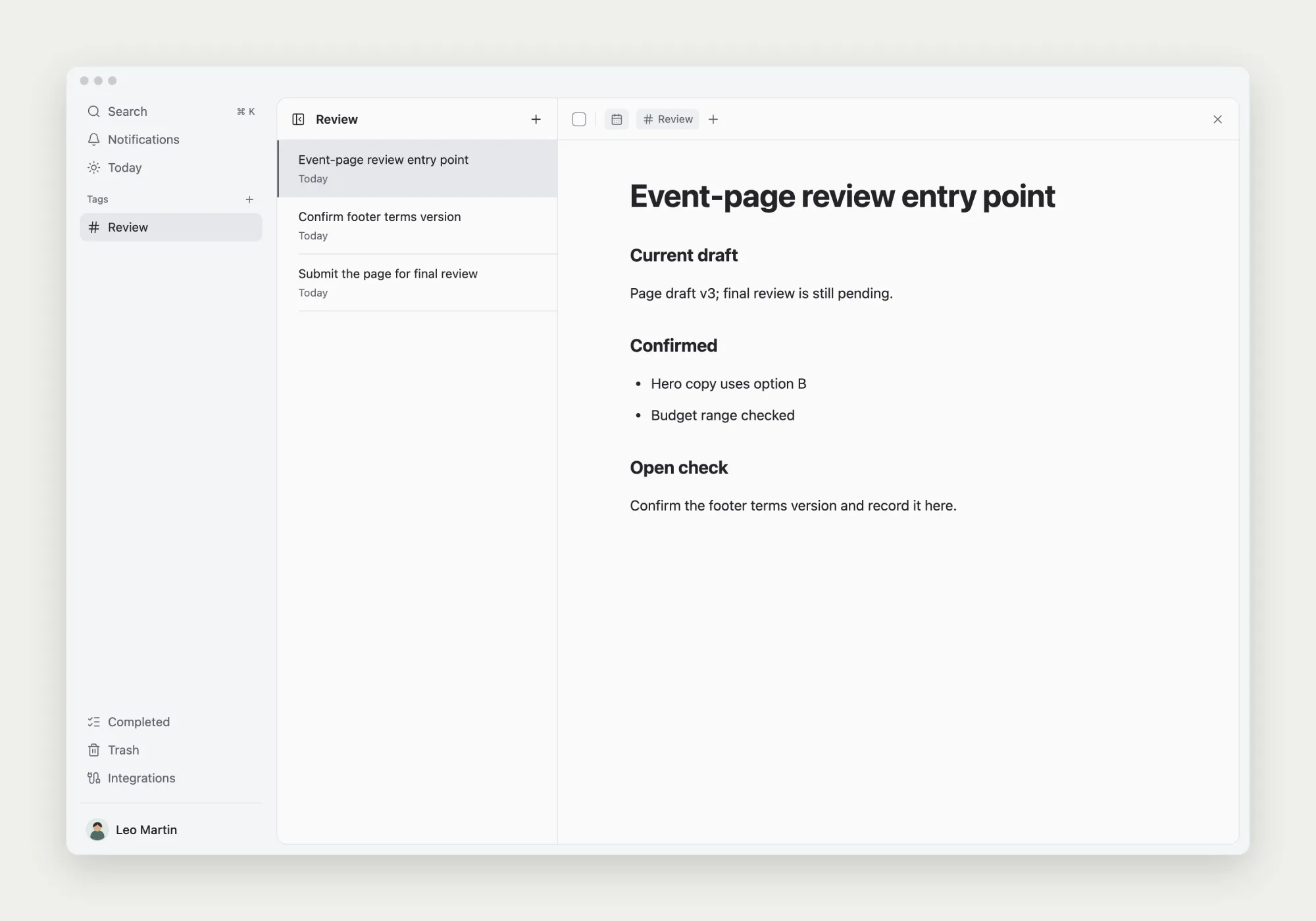
A template you can copy
Task and expected deliverable:
Start and actual delivery time:
Where AI was used:

Most frequent interruption reasons:
Repeatedly retrieved sources:
Background repeatedly explained:
Stable entry point for the current draft:

Necessary tool switches:
Repeated steps that can be combined:
Review rework and its cause:
One change to try next:
Outcome used for comparison:Compare delivery and rework
Across several similar tasks, look for fewer repeated questions, a clearer current draft, and less review rework. A simple record of the three most frequent interruptions is enough to begin. Building a detailed tracking system can become another interruption.
TodoNote can keep source links, working notes, and follow-up tasks together. Design, communication, and approval may still happen elsewhere. The practical test is whether you can resume more easily after those necessary switches. If nobody maintains a field and it becomes misleading, remove it or reduce it to the fact that affects the next action.
See the tasks and subtasks guide for the controls, and Too Many Tasks in Progress? Set Personal Kanban WIP Limits for the next step.
Background reading: original source.