Plan a 2027 goal by choosing one important, observable outcome, identifying the state you need to reach by the end of the first quarter, and defining actions you can start soon. An annual direction does not need twelve months of daily tasks. It needs evidence of progress, visible unknowns, and review points.
“Improve professionally” is a direction, but it cannot be scheduled for Tuesday. It lacks an object, an output, and a completion test. Before adding ten more aspirations, take one far enough that you can see what starting it will require.
Define a result you can inspect
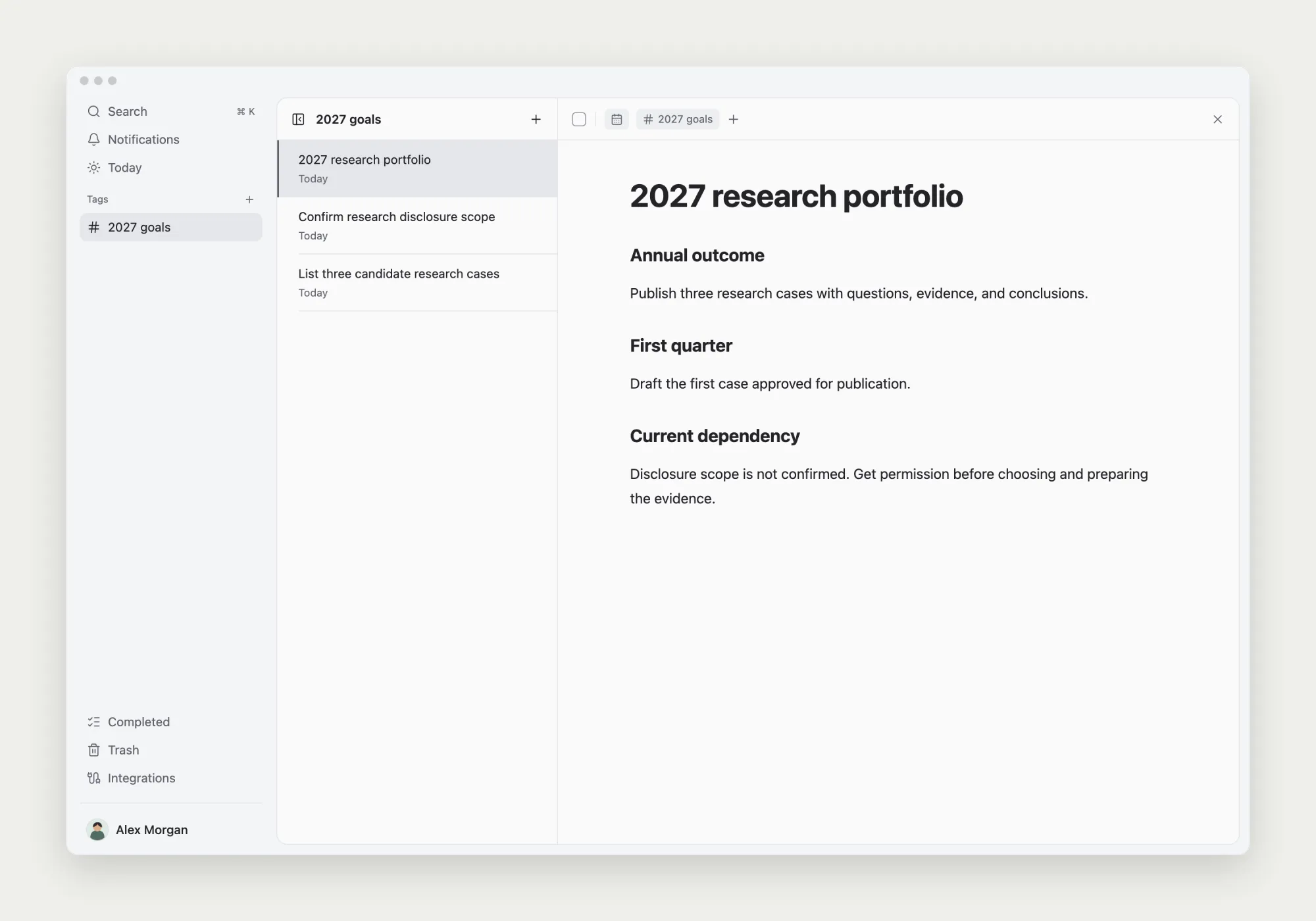
Alex wants to publish a product-research portfolio in 2027. He defines three cases, each explaining the question, method, evidence, and conclusion. This is a target, not a guaranteed result. Publication also depends on permission to use the material.
The first quarter should produce one permitted case with enough evidence for a draft. That tests the approach and reveals work the other cases may need. If an important assumption fails, revise the annual scope before building a schedule on top of it.
Check dependencies before writing the task list
The portfolio requires publication permission, original research records, and verified results. Check these before drafting so you do not finish a case you cannot share. When approval timing is unknown, schedule a follow-up instead of inventing a certain completion date.
| Situation | Response | Record to keep |
|---|---|---|
| The annual direction is abstract | Define an observable result | Completion criteria and scope |
| A quarter depends on permission | Schedule confirmation first | Permission status and response |
| A weekly action cannot start | Reduce it to an information request | Missing input and next check |
Schedule only the next work that can start
Alex first lists candidates, asks about disclosure scope, and chooses a case for evidence review. The task note preserves the selection reasons. Separate subtasks cover permission and material checks. Annual direction, quarterly outcome, and weekly action continue to point toward the same result.
A template you can copy
2027 annual direction:
One observable outcome:
Completion criteria and evidence:

State required by the end of Q1:
Most important assumption:
Material, permission, and support needed:
Known dependencies and waiting items:

Actions that can start this week:
Start dates and genuine deadlines:
Work not scheduled yet:
Monthly review questions:
Actual results and estimate differences:
Next-quarter scope changes and reasons:Use actual results to revise the following quarter
In TodoNote, an annual parent task can keep the direction and conditions; subtasks can represent quarterly outcomes and concrete actions. Dates express starts and real deadlines. Tags help find research records later. Record the outcome of a step before checking it off so the next review has evidence.
Once a month, ask whether the goal still matters, whether dependencies changed, and where estimates were wrong. At the end of the first quarter, use the first case's real workload to plan the next stage. If the target shrinks, keep the reason and new scope. The plan should remain connected to the work you can actually do.
See the tasks and subtasks guide for the controls, and How to break down a task into subtasks you can start and check for the next step.
Background reading: original source.