A delegation brief should specify the result, deadline, inputs, decision authority and checkpoints. Ask the recipient to explain how they will begin and identify missing information. Agree who can resolve blockers and which changes need confirmation before work starts.
“Check the website tomorrow” leaves reasonable questions: which version, which pages, can I edit directly, and who decides when a price differs?
One sentence can hide several assignments
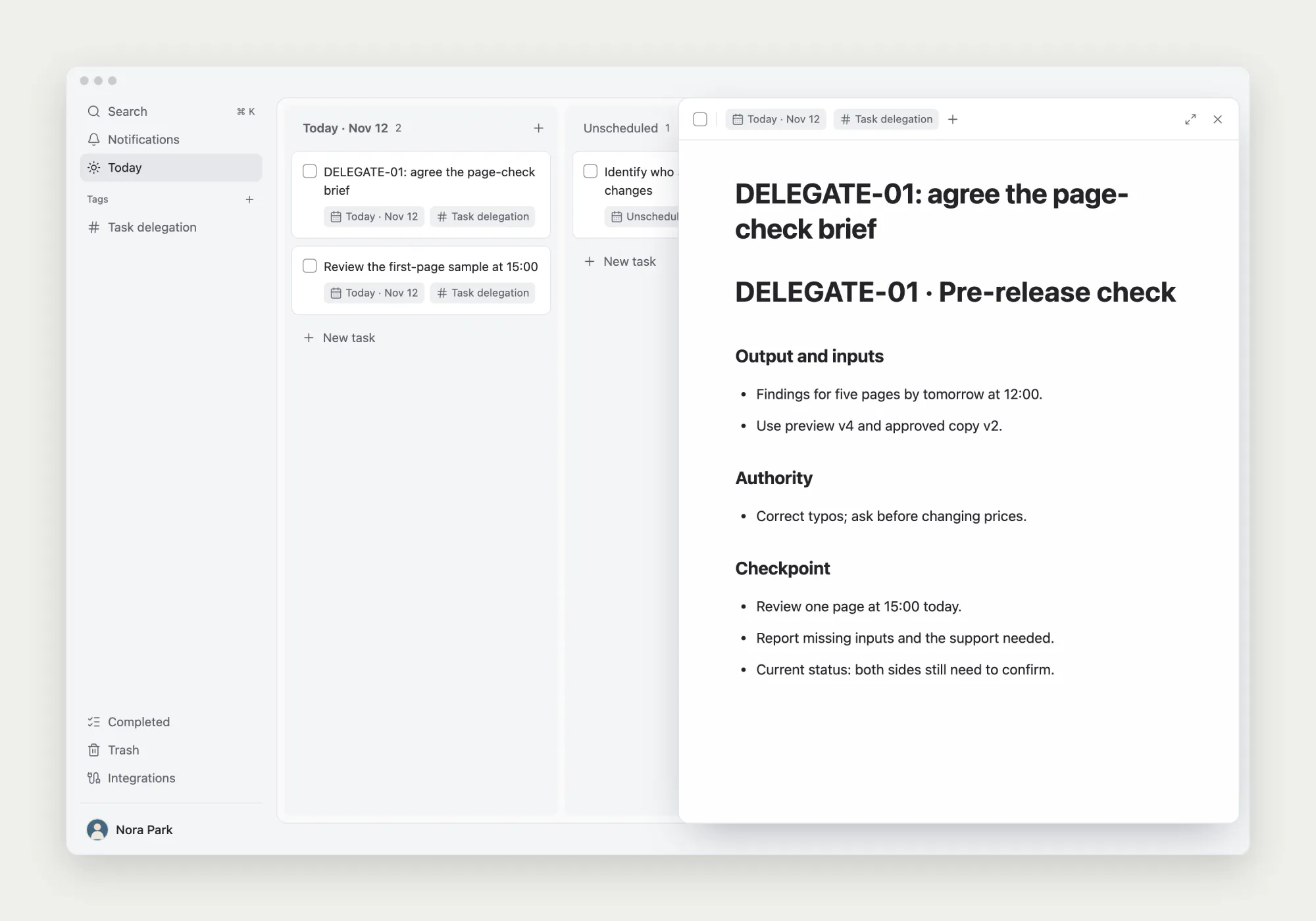
DELEGATE-01 requires findings for five pages by tomorrow at 12:00, using preview v4 and approved copy v2. Typos can be corrected directly; pricing changes need a designated decision-maker. Review one page at 15:00 today.
These details establish scope, evidence, authority and feedback. They leave room for independent execution without prescribing every click.
| Instruction | Missing information | Clearer agreement |
|---|---|---|
| Check the website | Scope and output | Findings for five pages, with issue locations |
| Fix any problems | Decision authority | Correct typos; confirm pricing changes |
| Send it tomorrow | Actual use time | Findings by tomorrow at 12:00 |
| Keep me posted | Checkpoint | Review one-page sample today at 15:00 |
Ask for a concrete restatement
I’ll compare preview v4 with copy v2 and show you one page at 15:00. I’ll flag price discrepancies for confirmation. Is that the intended scope?
A restatement reveals misunderstanding more effectively than “Understood?” It also gives the recipient space to identify missing material or an unrealistic deadline.
Choose a checkpoint that can change the work
The first-page review verifies the comparison version and whether findings are usable. Discovering a recording problem after all five pages are checked would cause avoidable rework.
Keep the brief and confirmed agreements in a TodoNote task, then communicate necessary information through the normal channel. A personal record does not automatically establish the colleague’s acceptance.
Make blockers actionable
A useful blocker report names completed work, the obstacle, attempted approaches and the support or decision needed. The lead can then provide material, clarify authority or adjust delivery.
Finally check the output against the agreement and retain conditions discovered during execution. Reuse those concrete lessons for the next delegation rather than making every brief longer.
Related practice: How to write project handover notes someone can act on (with template)