For a week across several design clients, list agreed deliverables, deadlines and missing inputs before scheduling work. Keep each round of feedback with its revision task. Give waiting work a follow-up, and completed work a version and delivery record, so the next client switch has a clear starting point.
Alex is working on a Willow Café homepage and a Ridge Books event poster. The homepage awaits feedback; the poster is due Thursday. This week shows how incoming comments change a plan without losing the basis for each revision.
Check what each client needs to supply and receive
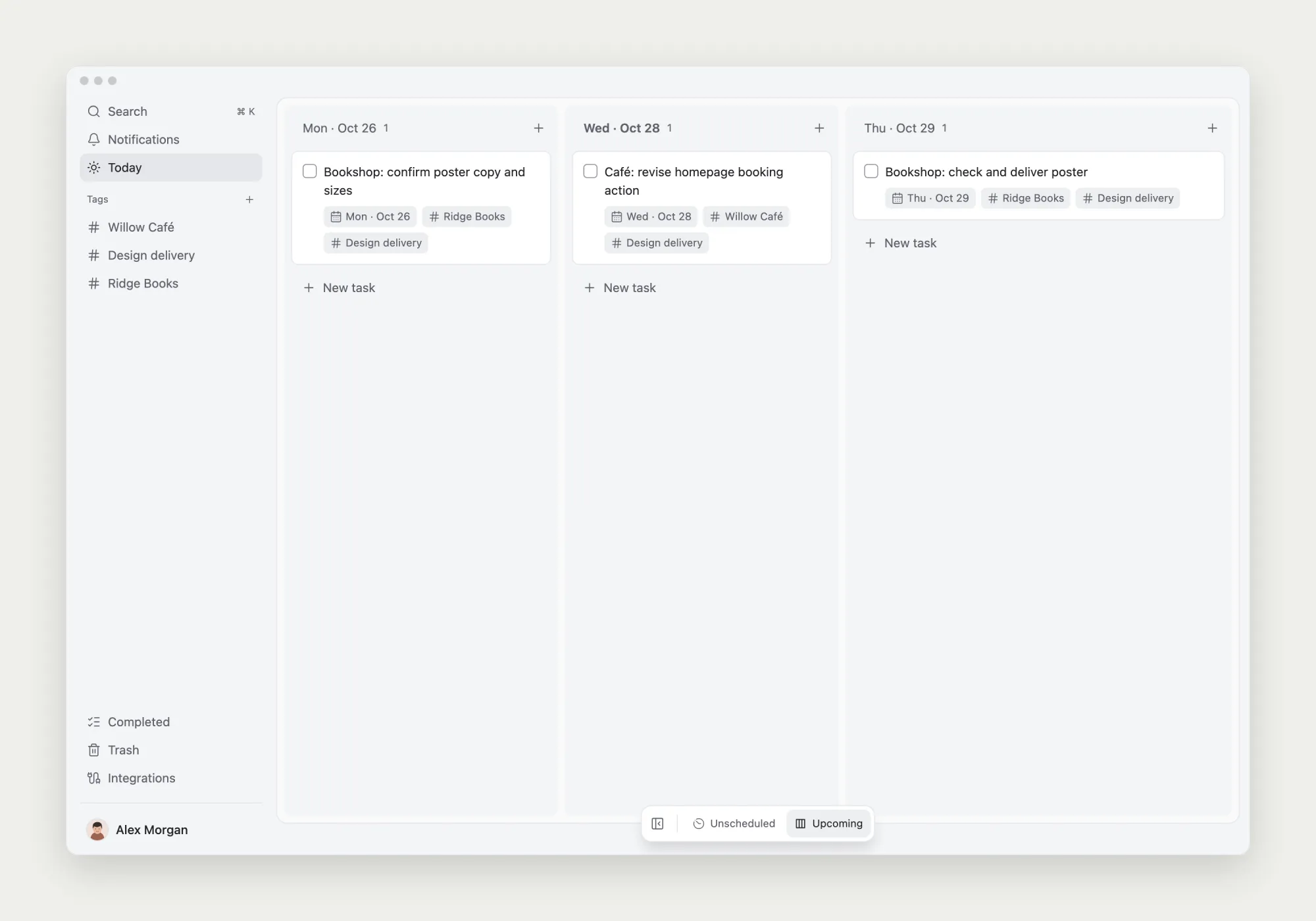
On Monday, confirm poster sizes and final copy with the bookshop. For the café, establish who consolidates homepage feedback and which changes were already agreed. Link the current files instead of creating another copy of the source material.
A Thursday poster delivery means confirming copy Monday, designing Tuesday and proofreading Wednesday. Until café comments arrive, schedule a Wednesday follow-up; decide the revision scope and date once the input is available.
| When | Work to move forward | Record to keep |
|---|---|---|
| Mon · Oct 26 | Confirm poster copy and sizes | Final-copy source and output agreement |
| Tue · Oct 27 | Design poster and request proofreading | Version and outstanding checks |
| Wed · Oct 28 | Handle café homepage comments | Agreed edits and an open addition |
| Thu · Oct 29 | Deliver poster and homepage revision | Sent versions and message locations |
| Fri · Oct 30 | Follow up on scope and review | Open commitments and reusable checks |
Plan around deadlines and dependencies
In TodoNote, use a start date for when you intend to work and a due date for a real delivery commitment. A waiting homepage does not need to become ‘revise today’ every morning. Follow up on its input while moving the poster forward.
When café comments arrive Wednesday, check their effect on Thursday’s commitment. If added work exceeds the existing plan, confirm scope and timing with the client before rearranging the week.
Separate agreed revisions from open requests
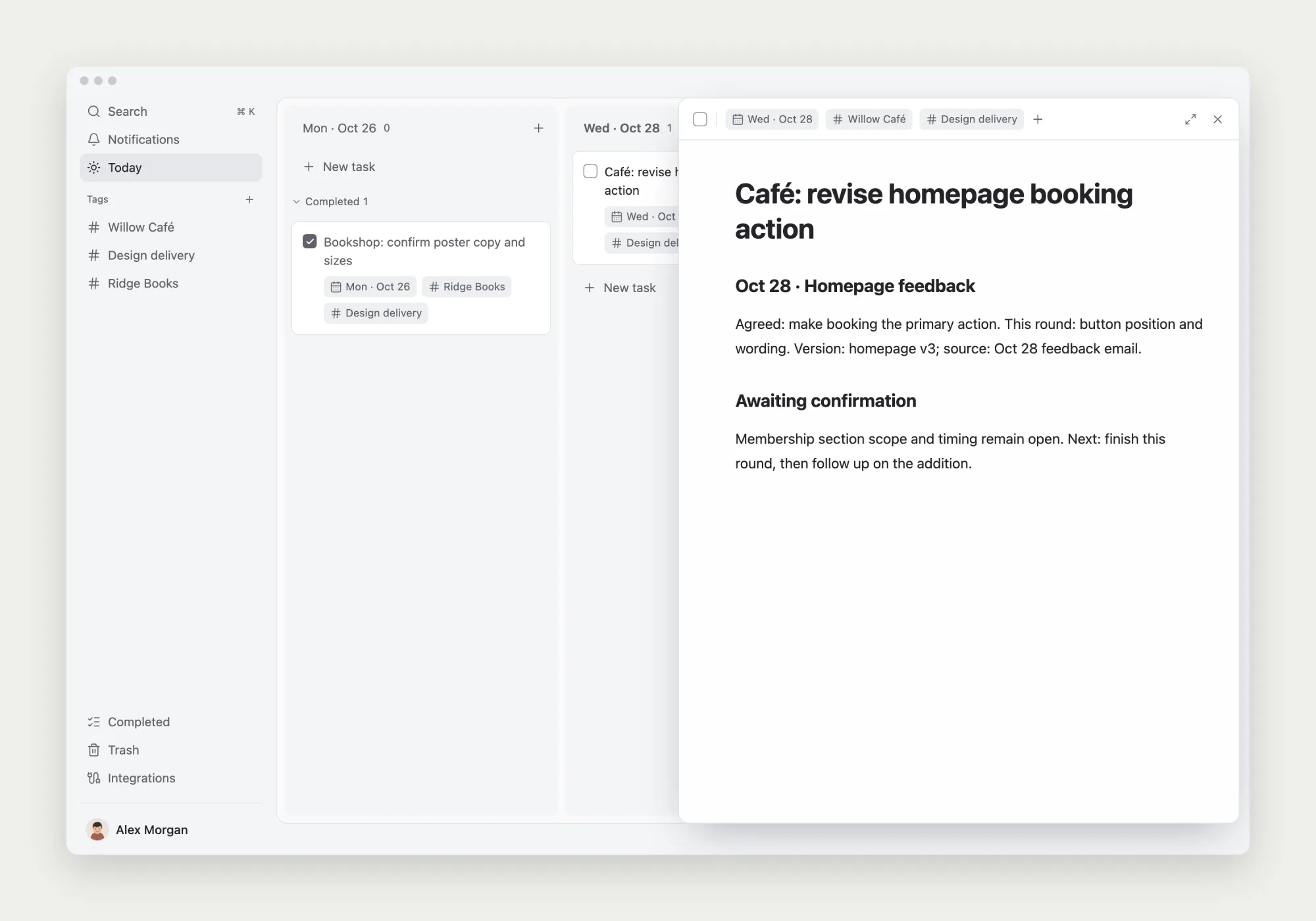
The café confirms that booking should be the main homepage action. A new membership section is requested but its scope is unresolved. The note distinguishes why the button changes, what this round covers and what still needs confirmation.
Keep the date, source email and design-version reference. Summarise feedback while retaining a way to verify it. A request is not an approval, and completing this round does not close the whole website project.
Leave a restart point before switching clients
Before moving to the poster, record the homepage version, completed edits and next action: booking button adjusted; new section awaiting confirmation. Opening the task later should tell you whether to design or ask a question.
For the poster, check the agreed copy, sizes and export files before sending. Save the sent version and message location. Track receipt or further changes according to what actually happened.
Use client tags for context and topic tags for experience
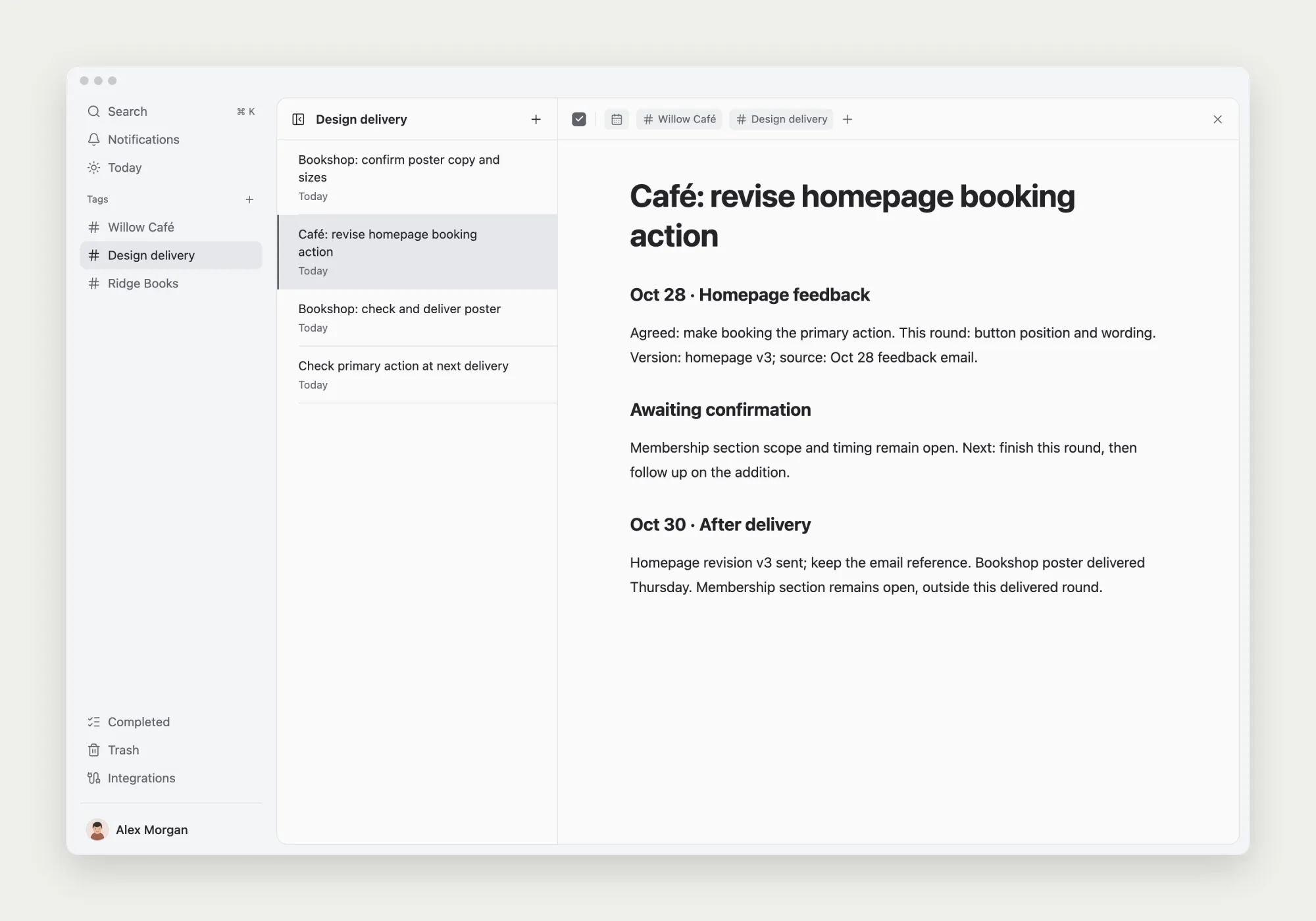
Add ‘Willow Café’ and ‘Design delivery’ to the homepage task. One retrieves this client’s context; the other groups useful delivery checks across projects. Create tags for retrieval needs rather than for every comment.
On Friday, append that the revision was sent and the membership section remains open. Reuse checks for the primary action, final copy and output specifications on a new project, while keeping each client’s feedback and results in the original task.
Review the commitments still open
Ask who is waiting for your files and whose decision you need. The membership section needs a specific follow-up, rather than an unsupported promise to finish the whole website next week. Preserve the delivered poster version and schedule later changes separately.
AIGA’s design services resource distinguishes deliverables, client inputs and changes. Use those relationships to inspect your plan, alongside client follow-up notes when conversations continue. Start with one revision whose reasoning you would otherwise lose.