To track a job search, keep a dated record for each role: the job description, the application you submitted, the latest confirmed stage, and your next action. Schedule preparation, interviews, and follow-ups as separate tasks. After each conversation, record the questions, explicit feedback, and anything you need to prepare before the next round.
Maya is applying for product design roles at Cedar Labs, Coast Tools, and North Studio. One application has reached a second interview, another has just been submitted, and a third is waiting for feedback. Her records need to support both today’s work and the next conversation with each employer.
Give every application a traceable starting point
Save the employer, role title or reference number, original listing, submission date, and the exact résumé and portfolio versions you sent. A listing can change, and your current portfolio may differ from the submitted file. A filename and date make that distinction easy to check.
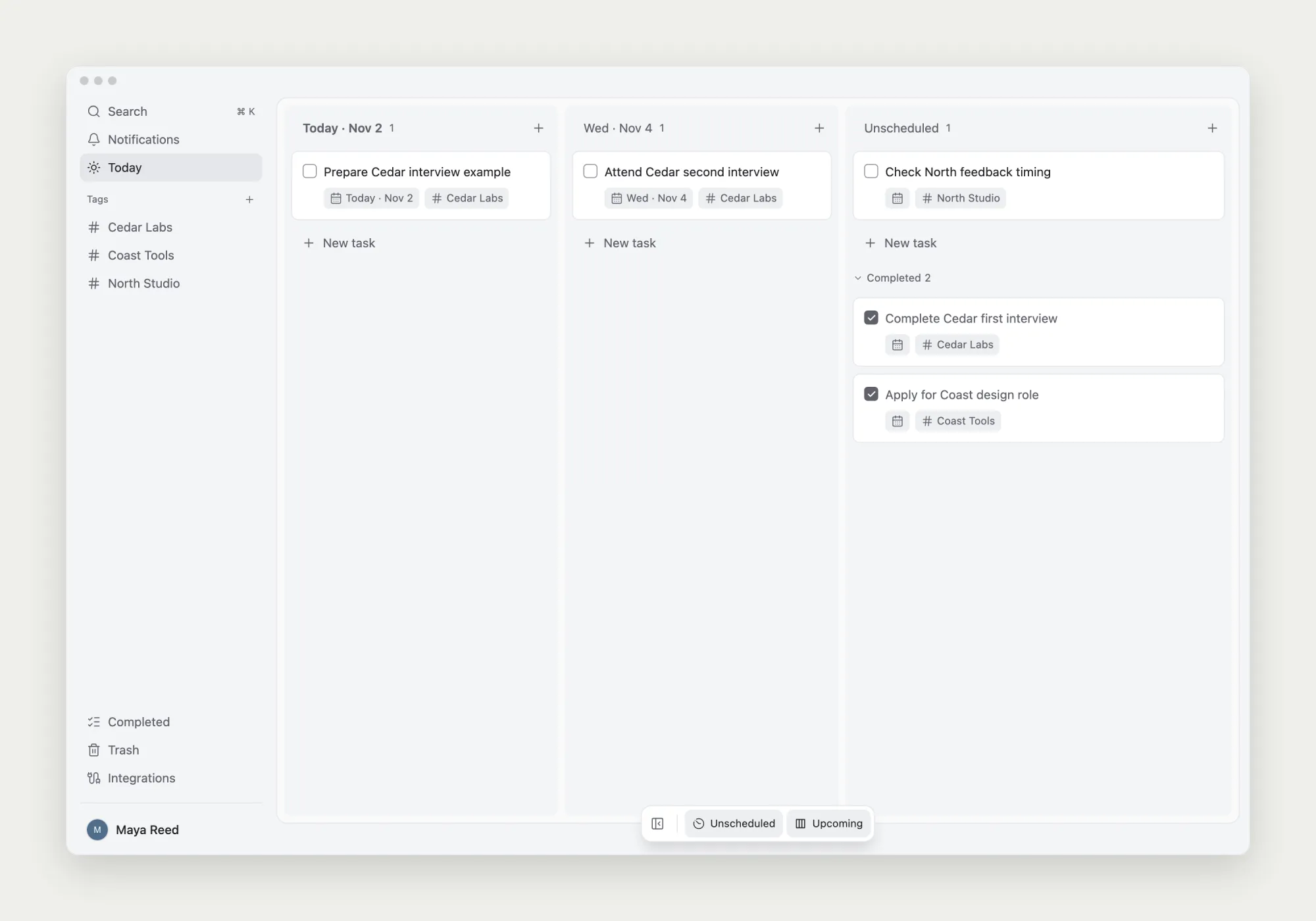
In TodoNote, use an employer tag to bring related tasks together. Include the role reference in titles when applying for multiple positions at one company. Add the tag to each preparation and interview task yourself so that all relevant records can be found from the same place.
| Role | Confirmed progress | Next personal action |
|---|---|---|
| Cedar Labs · Product designer | First interview Oct 30; second round confirmed for Nov 4 | Prepare a project trade-off example |
| Coast Tools · Product designer | Submitted Nov 2; no reply yet | Keep submission confirmation |
| North Studio · Product designer | First round finished; feedback pending | Check the agreed feedback date |
Turn each stage into work you can schedule
“Prepare for round two” becomes more useful when it has a clear result: choose a project, explain an alternative you rejected, and verify the evidence behind the portfolio claims. Start preparation today and schedule the interview for its confirmed date. Set a submission deadline only when there is an actual requirement to meet.
The board shows dates for your actions. Keep the application stage, its latest update, and its supporting message in the role record. Completing a submission task means the application was sent; create new tasks for later preparation or follow-up as needed.
Separate questions, employer feedback, and your own observations
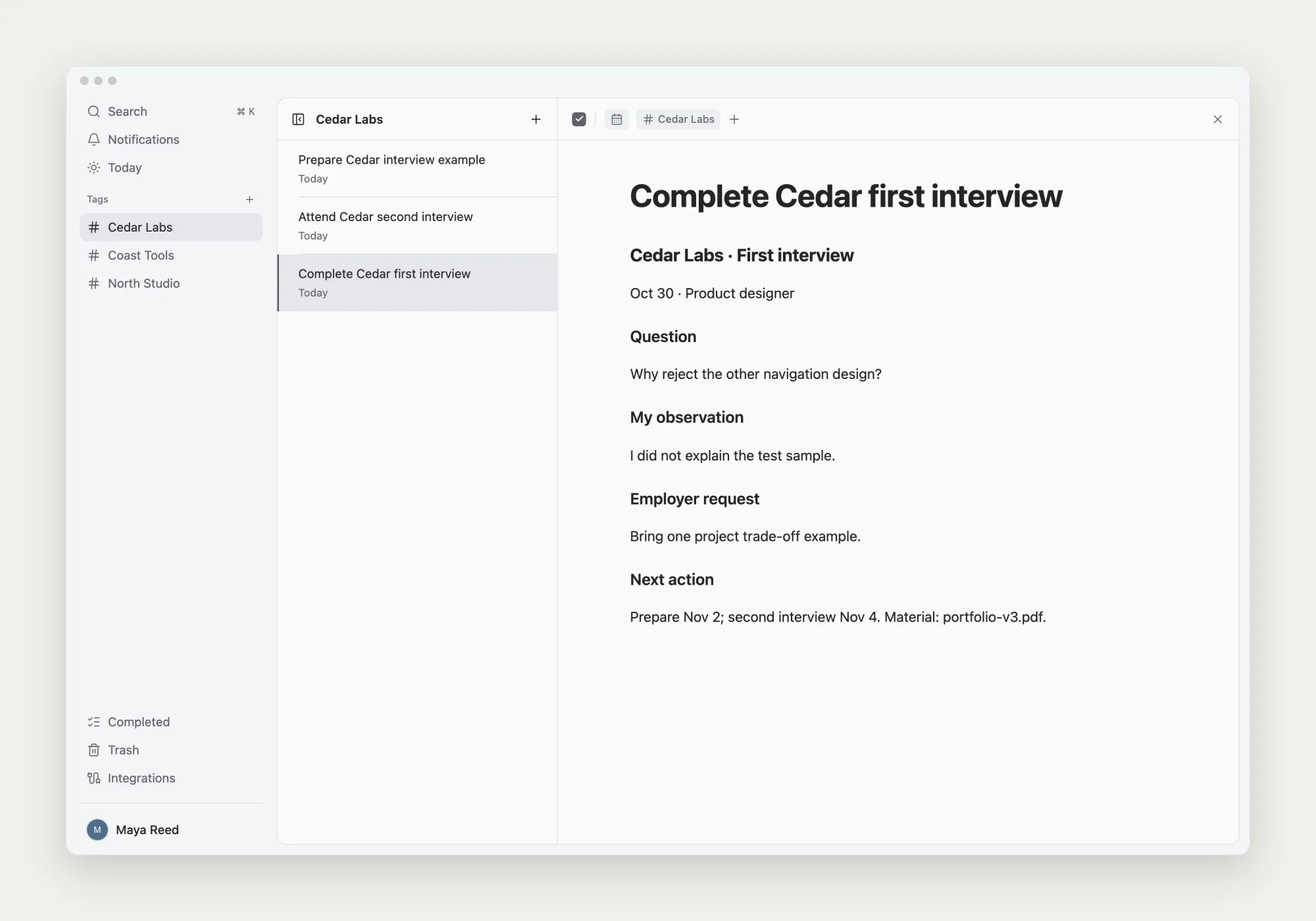
At Cedar Labs, Maya was asked why she rejected an alternative navigation design. She records the question, which project she used, and what was missing from her explanation. “I did not explain the test sample” is her observation. It should stay separate from anything the interviewer explicitly said.
Harvard’s interviewing guide recommends researching the organization and role requirements and being ready to explain how your skills meet them. For preparation, connect each requirement to a project where you can describe your contribution and reasoning, then revisit questions from the previous round.
Keep each interview record with its actual date. Finish the interview task after the conversation, retaining the note. Before round two, open the employer tag to find the earlier questions and requested material.
A reusable job application and interview template
Start with one short record per role. Add dated interview sections or keep each round in its own task. Update the stage and next action when something actually changes.
Employer / role / reference:
Job description and source:
Submitted on / channel / confirmation:
Résumé and portfolio versions:
Current stage / updated on / evidence:

Interview date / round:
Questions and projects discussed:
Explicit employer feedback or requests:
My observations and missing material:

Agreed next step / timing:
My next action / scheduled date:
Outcome / closed on (once confirmed):Use agreed timing and reuse relevant preparation
If the recruiter promises feedback on Friday, record that agreement and check it then. Otherwise, use the employer’s stated process to choose an appropriate time to ask about progress. No response means there is no new information; it does not by itself confirm rejection or call for a daily message.
While preparing the Cedar Labs example, Maya sees that it may help with other interviews. She adds an “Interview examples” topic tag to the relevant record. Reuse the project facts, then adapt the selection to the next role and check that the files still support the claims.
When an application ends or you decide to withdraw, update the record, finish any closing actions, and remove preparation you no longer need. A short weekly review can help you identify which applications still have a useful next step.