A photography shoot checklist works best around one practice goal: what you want to observe, where to go, what to bring, and what the location requires. Afterward, connect image numbers with your selection reasons and missed intentions. Preparation then leads into a useful review.
Having every piece of equipment does not decide what to photograph. A specific goal, such as people moving through side light at a street corner, helps you choose a route, where to wait, and what to look for in the files later.
Name one thing to practice
“Take better photographs” is broad. “Compare subject position and light at one crossing” gives the outing a more observable purpose. You can explore without trying to practice every photographic technique at once.
Let the route serve that purpose. Check access, photography rules, and conditions. Keep an option to shorten the outing or change scenes if the actual weather or situation calls for it.
Check what you cannot easily replace on location
Battery charge, a prepared storage card, and the equipment you have chosen can be subtasks. Add return arrangements and location requirements. The checklist supports this shoot rather than becoming a shopping list.
Write a short framing idea or observation to try. At the scene, adjust it to the light, space, and people around you. Preparation gives you a starting point without prescribing every frame.
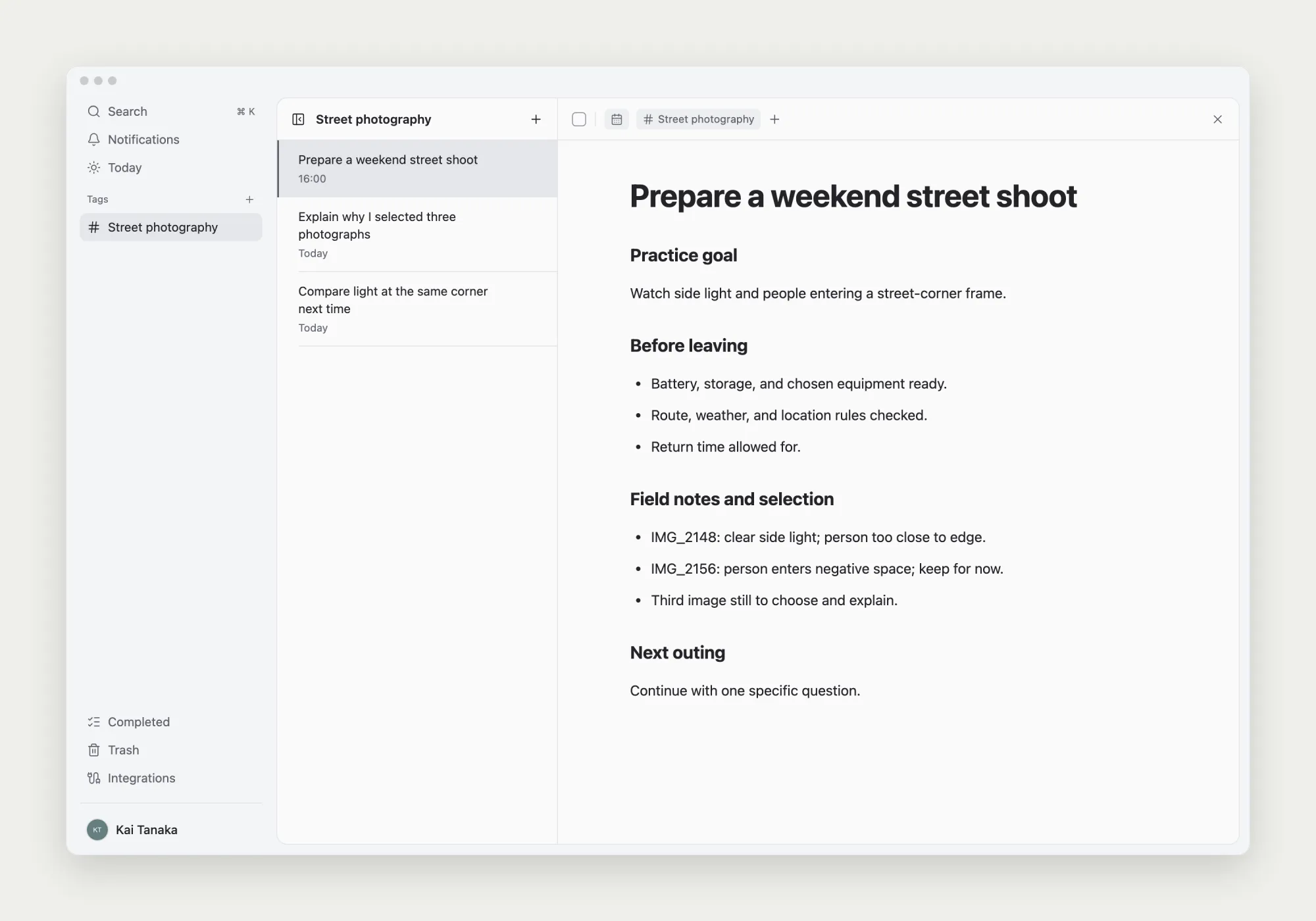
For example, IMG_2156 can carry “person enters negative space; keep for now”, while IMG_2148 carries “clear side light, but too close to the edge”. The references connect judgments to actual frames. Choosing and explaining the third image remains open.
Record what the image file cannot tell you
Settings are often available in file metadata. Your reasons for waiting, a sudden change of light, or the timing you missed may not be. Keep a short note tied to an image number or time range.
Leave the photographs in their existing file location and keep the folder and references in the task. You do not need to copy the entire shoot into the note; you need a reliable connection between observation and image.
Select three images and explain why
Choose one that achieved your intention, one that came close, and one that fell short. Describe visible differences in framing, subject position, or timing instead of only labeling them good and bad.
Choose one follow-up question, such as returning to the corner at a different time. In TodoNote, preserve preparation and review in this task, open another for the next shoot, and connect them with a photography tag.
A field note to reuse
Date / location:
One thing to practice:
Route and alternative:
Equipment checks:
Location rules / weather checked:

Field observations:
Original folder / image numbers:
Selections and reasons:
What fell short:

One change for next time:
Follow-up task:An attempt that almost worked can contain the next useful exercise. Preserve the intention and observation so you can try again deliberately. See using notes after tasks are complete for keeping that history accessible.