Build a case library by extracting a specific problem, choice, result and evidence from completed work. Note which point each example illustrates. For a talk, select by audience and topic, supply essential context, check what can be shared and rehearse before deciding what to keep.
You can have months of work notes and still face a blank slide. Work records explain execution; a talk needs to explain why a particular choice is worth examining.
Find one consequential choice
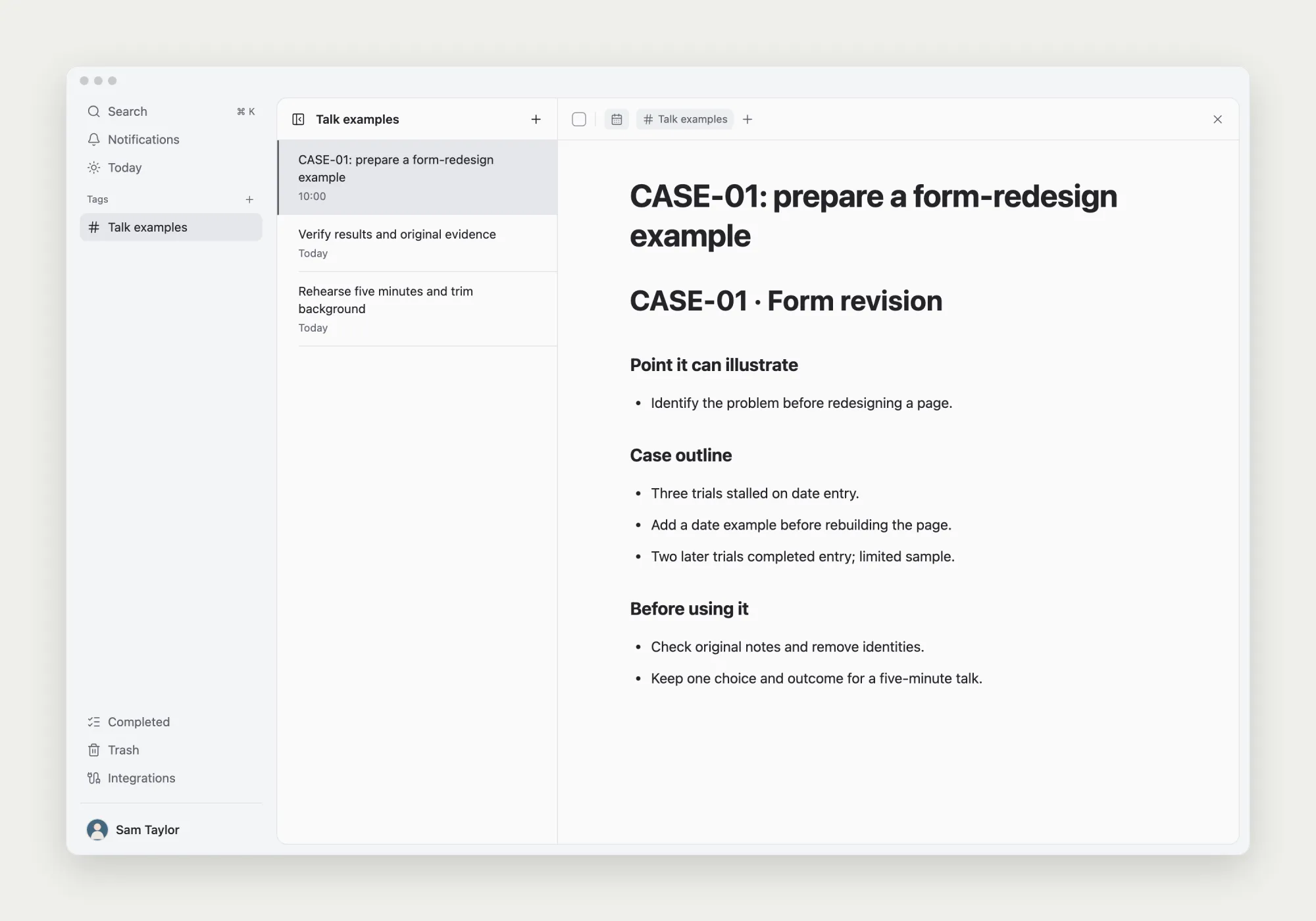
CASE-01 concerns a form where three trials stalled on date entry. The team added an example before redesigning the whole page. This illustrates narrowing a problem before choosing the size of a change.
Two later trials completed entry. That is an observation with a small scope, not evidence that every user’s problem disappeared or that conversion improved by an invented percentage.
Extract a case, not the whole project
| Record | Extracted material | Purpose |
|---|---|---|
| Three trial notes | Shared difficulty with date entry | Establish the problem |
| Design discussion | Example text versus full redesign | Explain the choice |
| Two later trials | Completed entry; further observation needed | Describe outcome and limits |
Keep context, tension, choice, result and evidence locations. Add what the case can illustrate and what it cannot establish. These labels help future selection.
Change the edit for the audience
Designers may need field and copy details. Project leads may care more about choosing a smaller intervention. The emphasis can change while the facts and observation limits stay consistent.
In TodoNote, prepare the current talk in its own task and reference cases grouped by topic tags. After using a case, record audience questions and explanations that did not land.
Rehearse the five-minute version
State the point, introduce only the necessary background, then spend time on the choice and result. If too much specialist context is required, trim it or choose a more accessible case.
If you remove this background paragraph, does the audience still understand why the choice was difficult?
Finally verify sources, sharing boundaries and result wording. A case library gives the next talk a reliable starting point; each audience still deserves its own edit.
Related practice: Do completed task notes need a separate knowledge base?