A project scope statement should identify the deliverables, included work, exclusions, required inputs, and process for assessing changes. Keep them in one record that can guide task breakdown, dates, and later decisions.
“Build a brand website” expresses a direction. It does not establish whether accounts, another language, or multiple redesign rounds are included. Expand the points where reasonable expectations might differ.
Describe deliverables you can inspect
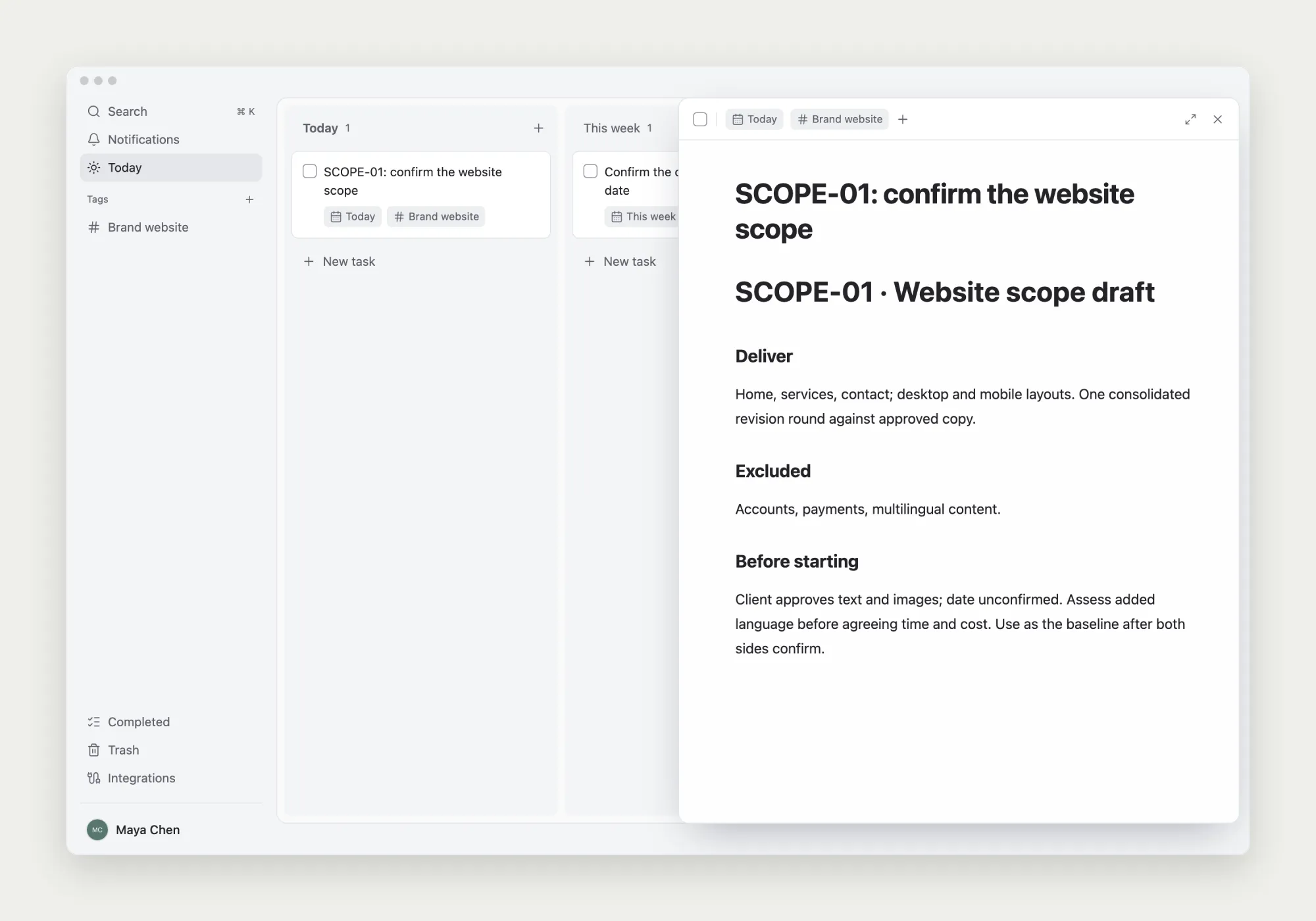
SCOPE-01 covers home, services, and contact pages, with desktop and mobile layouts. These can be checked more directly than “improve brand perception”. The goal explains the purpose; the scope names the work.
The Asana guide to project scope covers deliverables, resources, constraints, and exclusions. For a small engagement, start with boundaries that actually affect execution.
Specify exclusions and revision rules
The draft excludes accounts, payments, and multilingual content because they could plausibly be assumed to belong to a website. Exclusions should address this project, rather than every possible feature.
Define a revision round too: one consolidated set of comments on the agreed direction, for example. A new direction needs an impact assessment. Confirm the wording with both sides before treating it as the baseline.
Connect inputs with the start plan
If copy and images are not approved, their availability is still an open condition. Record who provides them and when that date will be confirmed. A planned start should not quietly assume missing materials are ready.
In TodoNote, keep the scope draft in the project task note and track input and review decisions as subtasks. After confirmation, break the deliverables into tasks. Keep the draft status consistent with the actual approval record.
Assess additions before updating the baseline
An added language may affect page count, translation inputs, and layout. Record the request, assess time and cost, then update the scope version and task schedule after agreement.
Project / scope version:
Goal / deliverables:
Included pages / features:
Excluded work:
Delivery format / checks:

Client-supplied materials:
Approval owner / date:
Review and revision rounds:
How feedback is consolidated:

How changes are assessed:
Cost / schedule agreement:
Open questions:
Confirmation record / next step:During delivery, use a requirement change log to preserve the difference. Final acceptance should return to confirmed deliverables and checks rather than treating an unconfirmed idea as an earlier commitment.