A recipe-testing note can start with four questions: what was the source, what did I actually do, how did it turn out, and what will I change next? Give each trial its own dated task and use a dish tag to collect them. A repeatable version can grow out of that history.
The same recipe can produce different results when quantities, equipment, or steps change without being recorded. “Good this time” is pleasant to read, but difficult to reproduce next weekend.
Keep the source and the actual quantities
Save the original link, author, or version, then record what you really used. Include substitutions, a different tin, or ingredients added midway. That makes later comparisons easier to interpret.
For a banana cake, useful details may include banana weight, sugar, tin size, oven settings, actual time, and when you checked it. These describe this attempt; they are not a guarantee that another oven will behave the same way.
Choose one change you want to compare
Suppose the previous trial used 80 g of sugar and this one uses 70 g while other recorded conditions stay the same. Taste after cooling and describe whether it is closer to your preference. The intended difference is now explicit.
If the centre is still moist, do not immediately assign the cause to sugar. Other ingredients or steps may have varied. Keep the cause open and decide what to record next, such as the actual banana weight.
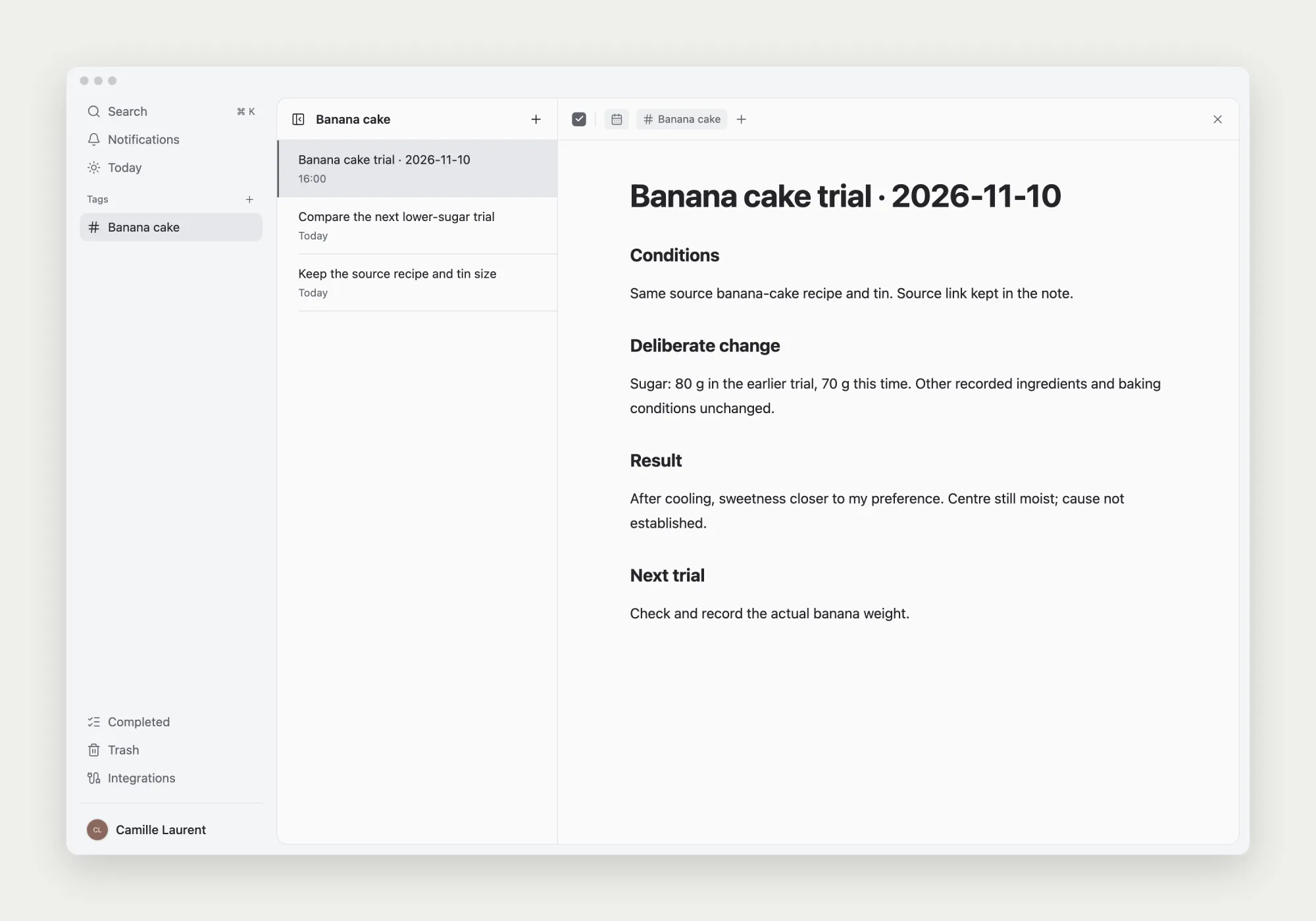
Give “delicious” a little more detail
Describe sweetness, saltiness, texture, and changes after standing, where relevant. Note when you tasted it and whose feedback it was. A photo is easier to interpret when you say whether it was taken straight from the oven or after cooling.
The note can stay short. Record the deliberate change, the clearest result, and one question while you remember them. The source already contains a complete method; your trial note adds what actually differed.
Keep a current recipe without losing the trials
When you want to repeat a version, write it up and link the attempts that informed it. A new ingredient or piece of equipment can start another trial while the earlier version remains available.
In TodoNote, the dish tag collects trial tasks and their notes. Complete the attempts you have made and keep untested adjustments open. The recipe and the next experiment remain connected.
A record after cooking
Dish / trial date:
Source recipe and version:
Actual ingredients and quantities:
Equipment / tin / settings:
Actual steps and timing:

One deliberate change:
Result and tasting time:
Personal preference / other feedback:
Cause still uncertain:

What to check or change next:
Version I would currently repeat:A personal recipe becomes easier to repeat when the reasons for changes remain visible. For collecting trials by dish, see organizing note tags.