At a rental viewing, record your non-negotiables, full housing costs, commute, living conditions, and open questions. Separate what you observed, what someone told you, and what remains unconfirmed. Use the same fields for every property.
Choose a few hard conditions before viewing, such as monthly housing cost, maximum commute, and essential facilities. Compare preferences afterward. Missing information is unknown, rather than evidence that a property meets a condition.
Make the record comparable
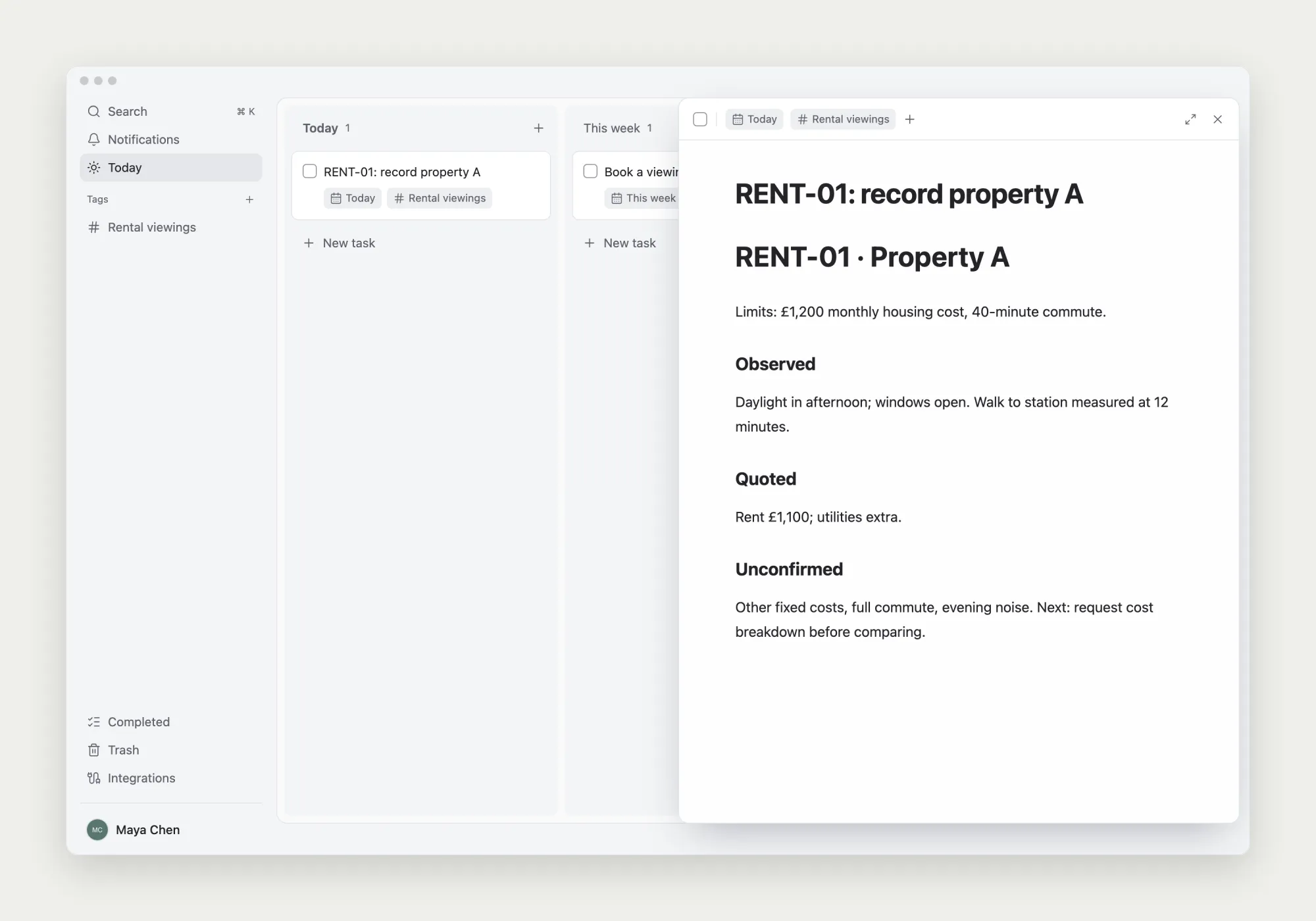
RENT-01 covers property A, with a £1,200 monthly housing limit and a 40-minute commute. Record whether quoted rent includes bills and when a journey was measured. Consistent fields make differences easier to interpret.
The Shelter viewing checklist offers prompts on property condition, rent, and bills. Turn the relevant items into observations and questions for the home you are viewing.
Keep statements separate from observations
Working windows and afternoon daylight were observed. Rent of £1,100 with utilities extra was quoted. Keeping the source of each item makes it clearer what needs confirmation if the details change.
A measured 12-minute walk to the station describes only that part of the trip. Transfers and waiting remain unchecked. It does not establish that the full commute fits within 40 minutes.
Make room for what you did not see
An afternoon visit cannot establish evening noise. “Utilities extra” does not provide a full cost breakdown. Keep those fields open and arrange a suitable follow-up, request details, or check supporting documents.
In TodoNote, create a viewing task for each property and gather candidates with a tag. Dates schedule appointments; notes hold observations, quotes, and questions. Cost and route checks can become follow-up tasks.
Compare after filling the important gaps
Complete your note promptly after the visit. Check hard conditions first, then preferences. Do not directly compare an incomplete rent quote with another property’s confirmed total cost as if they cover the same items.
Property ID / viewing time:
Non-negotiable conditions:
Rent / other recurring costs:
One-off costs / unconfirmed items:

Commute route / time measured:
Light / ventilation / noise:
Water / walls / fixture observations:
Quoted terms:
Supporting document / confirmation:

Not observed or confirmed:
Questions to ask:
Next check / date:
Conditions met / not met:Once the information is ready, a weighted decision matrix can organize trade-offs. Keep the reason for the choice, then use a moving checklist for the next stage.